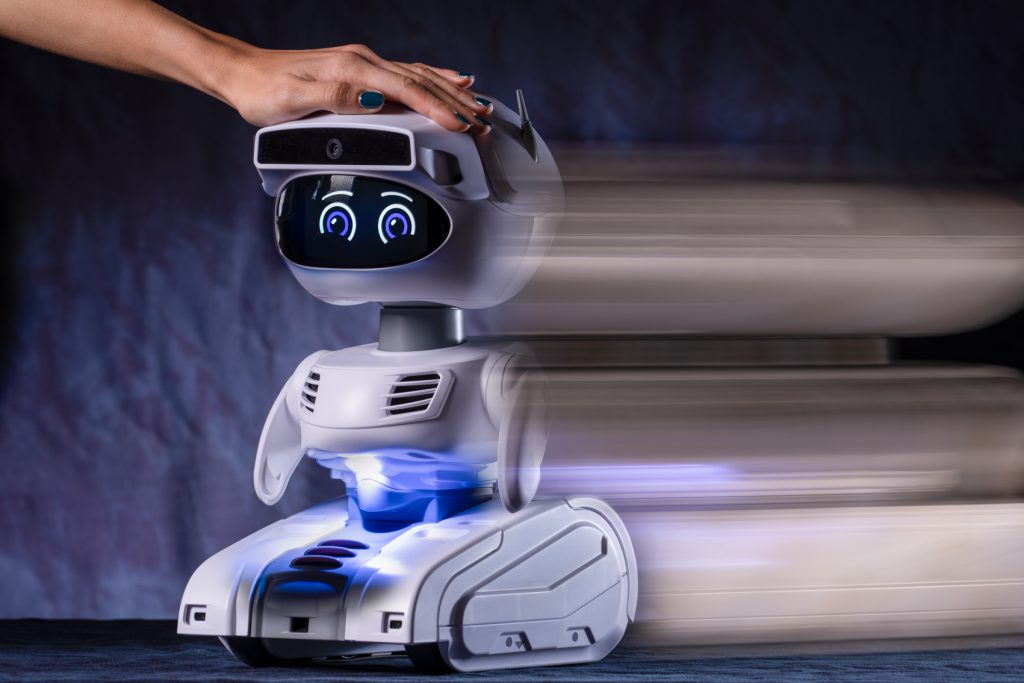
Biomedical devices and instrumentation

Description

The laboratory’s activities focus on biomedical measurements and instrumentation, with a specific emphasis on the development, characterization, and validation of measurement systems for monitoring physiological and biomechanical quantities. These systems often integrate Artificial Intelligence techniques for advanced data analysis.
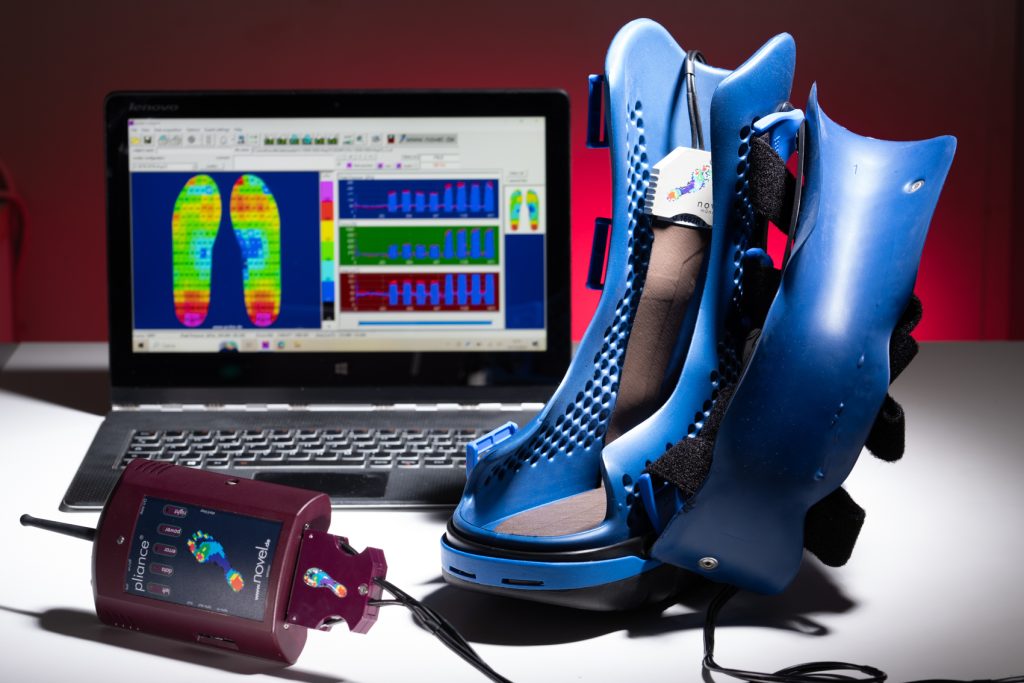
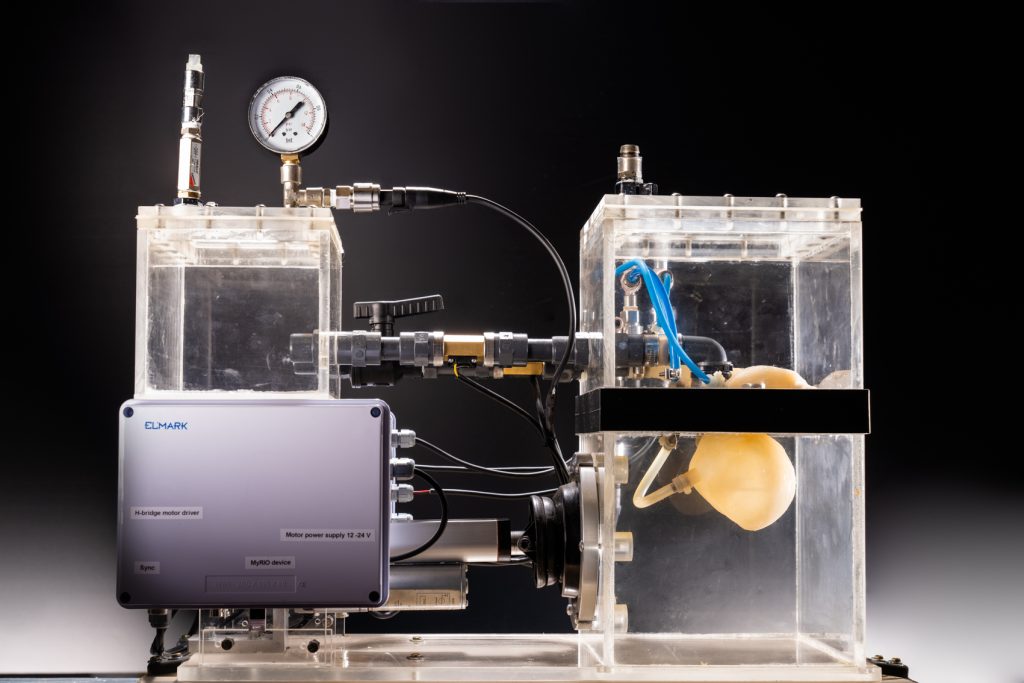
Main Research Areas

  • Pressure Analysis & Posturography: Load distribution (feet, hands, body) on contact surfaces and pediatric monitoring.
  • Non-Invasive Monitoring: Contactless heart/respiratory rate monitoring in incubators, as well as contactless temperature and blood pressure measurement.
  • Performance & Therapy: Mechanical characterization of pulsed therapeutic systems for physiotherapy and wearable sensors for sports performance.
  • Clinical Engineering: Development of test benches for heart valves and collimators for PET systems.

Focus 1: Wearable Devices

A dedicated research line focuses on wearable devices (IMU) for the continuous monitoring of ECG, respiration, and movement. The activity covers the entire development cycle: from hardware design to signal synchronization and real-life validation, ensuring reliable, non-invasive, and repeatable measurements for health and wellness applications.

Focus 2: Bone Healing Monitoring

The lab is developing cutting-edge diagnostic technology for the objective and non-invasive monitoring of the bone healing process, providing an alternative to ionizing radiation.
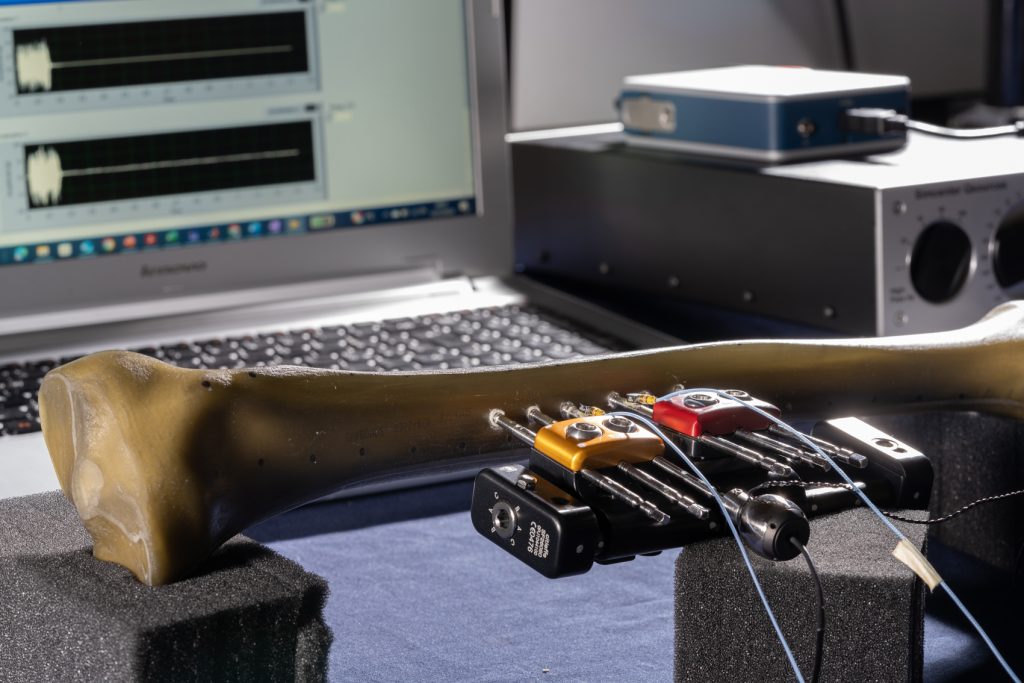
  • Methodology: Based on the transmission of mechanical vibrations across the fracture site.
  • Hardware: A miniaturized shaker (Q-HSH) excites the bone-external fixator system, while uniaxial miniaturized accelerometers (PCB 352C23) acquire the signals via SCADAS Mobile or National Instruments boards.
  • Objective: To correlate changes in vibration transmissibility with bone consolidation. Initial experimental validation was conducted using Sawbone synthetic models, which faithfully replicate the mechanical properties of human bone.
Publications
  • Cosoli G., Spinsante S., Scalise L. Wrist-worn and chest-strap wearable devices: Systematic review on accuracy and metrological characteristics (2020). Measurement: Journal of the International Measurement Confederation, 159, art. no. 107789; DOI: 10.1016/j.measurement.2020.107789
  • Morbiducci U., Scalise L., De Melis M., Grigioni M. Optical vibrocardiography: A novel tool for the optical monitoring of cardiac activity (2007). Annals of Biomedical Engineering, 35 (1), pp. 45 – 58; DOI: 10.1007/s10439-006-9202-9
  • Cosoli G., Spinsante S., Scardulla F., D’Acquisto L., Scalise L. Wireless ECG and cardiac monitoring systems: State of the art, available commercial devices and useful electronic components (2021). Measurement: Journal of the International Measurement Confederation, 177, art. no. 109243; DOI: 10.1016/j.measurement.2021.109243
  • Panni L., Cosoli G., Arnesano M., Citarelli F., Antognoli L., Scalise L. Measurement of Spatio-Temporal Gait Parameters Through a Wearable Device for the Evaluation of the Activity Level of Athletes (2025). IEEE Open Journal of Instrumentation and Measurement, 4, art. no. 6500212; DOI: 10.1109/OJIM.2025.3636681
  • Morresi N., Marchionni P., Antognoli L., Marinelli L., Correani A., Carnielli V.P., Scalise L. Serum Bilirubin Optical Measurement Adjusted for Oxyhemoglobin: Calibration Procedure Development for Portable Point-of-Care Bilirubinometers (2025). IEEE Transactions on Instrumentation and Measurement, 74, art. no. 4004709; DOI: 10.1109/TIM.2025.3550598.
Staff

Prof. Lorenzo Scalise
Tel. +39 071 220 4442
email: l.scalise@staff.univpm.it

Ing. Giuseppe Pandarese
Tel. +39 071 220 4100
email: g.pandarese@staff.univpm.it